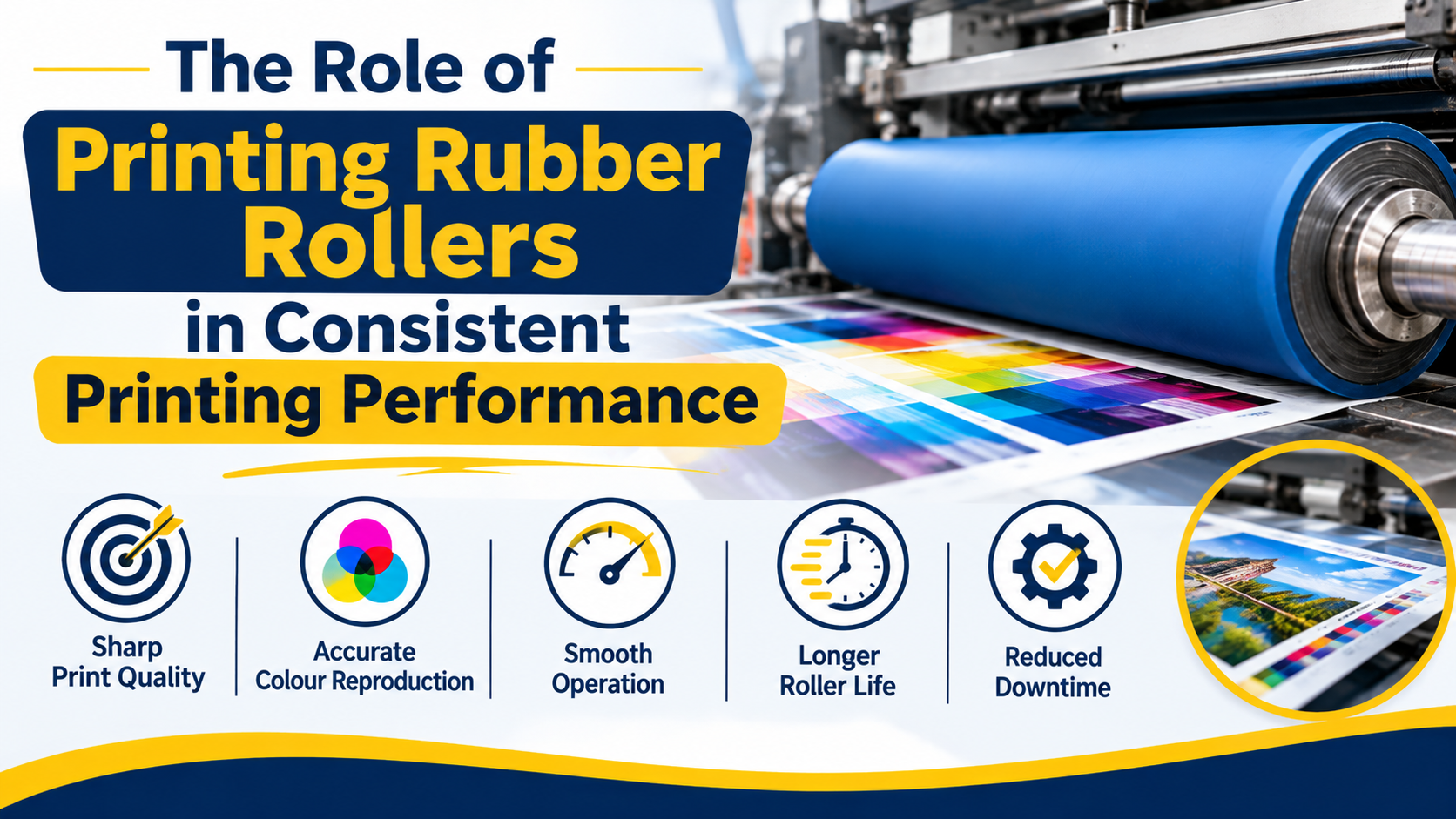
The Role of Printing Rubber Rollers
In printing, consistency is one of the most important requirements. A print job may run at high speed and involve sophisticated equipment, inks and substrates, but the final output depends on how well the different components of the printing system work together.
Printing rubber rollers are an important part of this system. While they may appear to be relatively simple machine components, they play an important role in maintaining consistent printing performance. Their compound, hardness, dimensions and surface finish can influence ink transfer, surface interaction and overall roller behaviour during production.
For printers, choosing the right printing rubber roller manufacturer is therefore about more than getting the correct dimensions. The roller needs to be specified according to the machine, printing process, ink system and operating conditions in which it will be used.
A roller that is suitable for one application may not deliver the same performance in another. This makes application-specific specification and manufacturing control important when the objective is consistent performance throughout a production run.
For a manufacturer, the goal is therefore not simply to produce a roller that meets a particular size or specification. It is to manufacture a roller that is suited to the application and can perform consistently under its intended operating conditions.
What Does Consistent Printing Performance Mean?
Consistency in printing means maintaining the required printing behaviour throughout the production process.
A roller may perform well when first installed, but the more important question is whether it can maintain the required characteristics during its intended operating conditions.
This is where the specification of the roller becomes important.
Factors such as:
- Rubber compound
- Hardness
- Roller dimensions
- Surface finish
- Ink compatibility
- Chemical exposure
- Machine configuration
- Printing process
can all influence how a roller performs.
There is therefore no single rubber roller specification that is suitable for every printing application. A roller designed for one process may have different requirements from a roller used in another.
The focus should always be on matching the roller to the application.
The Connection Between the Roller and Print Performance
A printing roller does not work independently. It forms part of a larger system in which the machine, ink, roller and printing process need to work together.
One of the important roles of printing rubber rollers is supporting consistent ink transfer. The properties of the rubber surface and the roller’s physical characteristics influence how it behaves during operation.
This makes seemingly small variations important.
For example, the required hardness can differ depending on the printing process, machine configuration and application. Similarly, the surface condition of the roller needs to be appropriate for the intended use.
A roller that is correctly specified for its application can therefore contribute to stable and predictable printing performance.
Why the Rubber Compound Matters
The rubber compound is one of the fundamental factors behind roller performance.
Different printing environments can expose rollers to different inks, chemicals and operating conditions. As a result, the compound needs to be selected according to what the roller is expected to handle.
Max Rollers works with rubber and polymer materials including NBR, EPDM, PVC, polyurethane and other synthetic rubber materials. The exact formulation varies according to the roller grade and application.
The objective of compounding is to achieve the required balance between characteristics such as:
- Hardness
- Elasticity
- Ink compatibility
- Chemical resistance
- Surface characteristics
- Durability
- Stability during printing
The compound is therefore not simply a material covering the roller core. It is an important part of determining how the roller behaves during use.
Hardness Is More Than Just a Number
Roller hardness is another important part of printing roller performance.
Hardness affects how the roller behaves during operation and how it works with other components of the printing system. The required hardness can vary depending on the printing process, machine configuration, ink system and application.
For example, Max Rollers‘ alcohol roller applications generally work around the 22–24 Shore A hardness range, depending on the specific application.
This illustrates an important point: hardness should be considered in context.
Choosing a roller simply because it has a particular hardness is not enough. The hardness needs to correspond to the application and the conditions in which the roller will operate.
Surface Finish and Dimensional Accuracy
A roller can have the right compound and hardness, but its performance also depends on its physical finish.
Surface finish plays an important role in printing applications because the roller surface interacts directly with the printing system. An unsuitable or uneven surface can affect printing performance.
Dimensional accuracy is equally important. The roller needs to meet the required dimensions and geometry for the machine in which it will be used.
This is why grinding and finishing are not merely cosmetic stages of manufacturing.
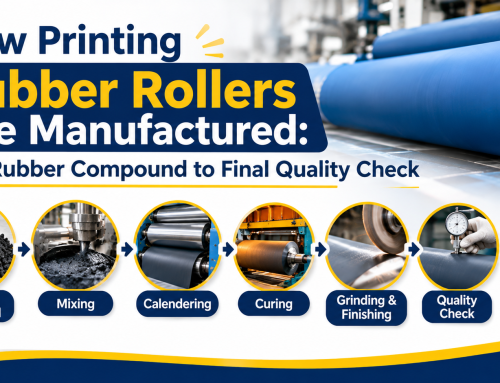
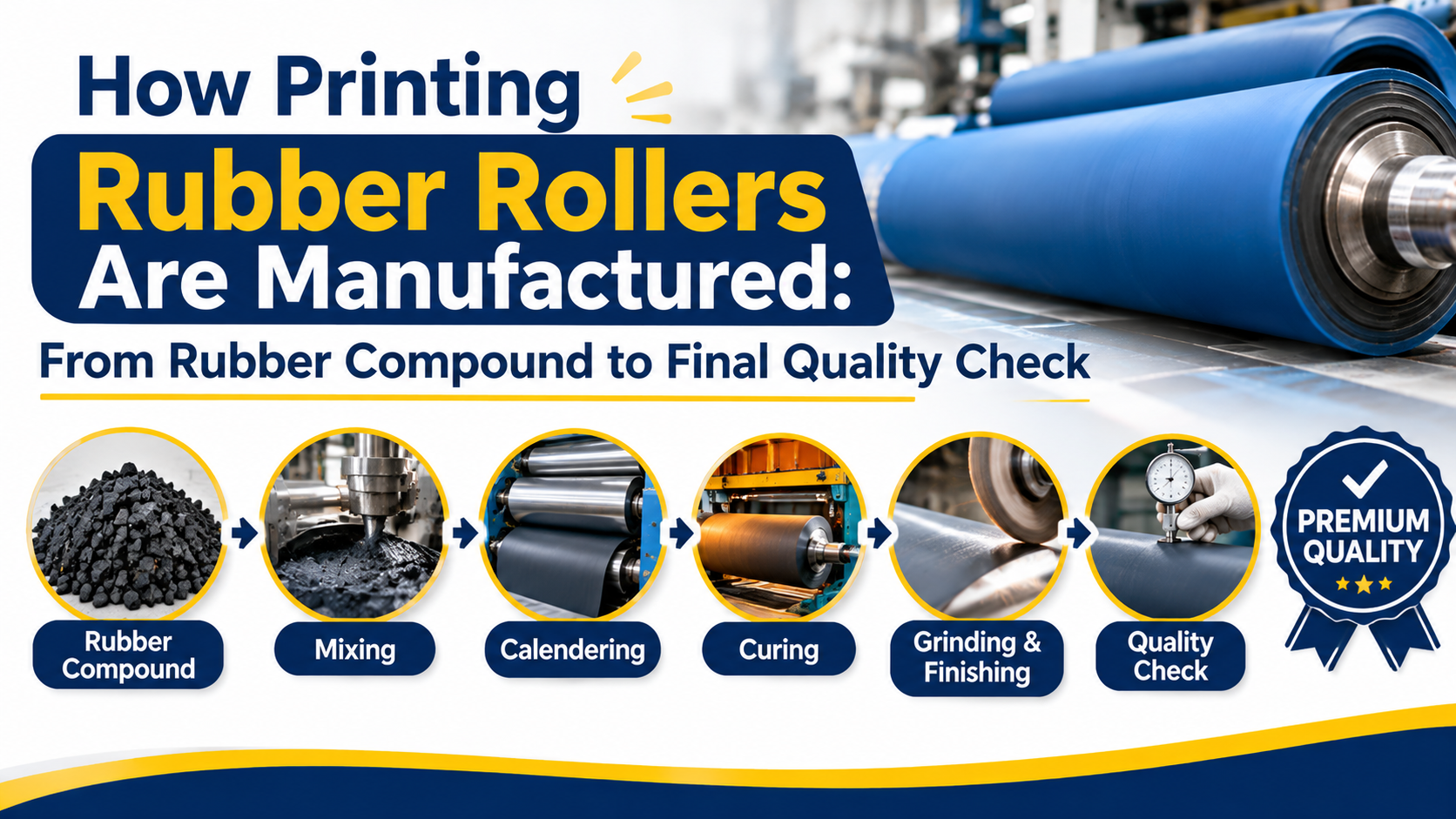
At Max Rollers, the manufacturing process includes rough grinding, precision grinding and polishing or surface finishing according to application requirements. The finished roller is then checked for dimensions, hardness, surface condition and other relevant parameters.
The objective is to ensure that the physical characteristics of the finished roller correspond to its intended application.
Consistency Starts Before the Roller Reaches the Machine
Printing performance is often judged after the roller has been installed, but consistency starts much earlier.
It begins with understanding the application and defining the appropriate roller specification.
It continues through material selection, rubber compounding, roller preparation, vulcanisation, grinding and finishing. Quality checks then help verify that the finished roller meets the required parameters.
This controlled approach matters because the final roller is the result of several interconnected stages.
If the compound is not appropriate, the required performance may not be achieved.
If hardness is not controlled, the roller may not behave as intended.
If dimensions or surface finish are not accurate, the roller may not perform consistently within the printing system.
For this reason, manufacturing control and application understanding go together.
Different Printing Environments, Different Requirements
Printing applications are not identical.
Conventional offset printing, UV printing and alcohol-based printing can place different requirements on the roller. The ink system, chemical environment and operating conditions can influence the compound and specification required.
For example, rollers used in more demanding UV or chemical environments may require different performance characteristics from those used in regular printing applications.
This is why the right question is not simply:
“Which roller do I need?”
It is:
“What does this roller need to perform under?”
Understanding the machine, ink, printing process, chemical environment, hardness requirement and operating conditions helps establish the appropriate specification.
Why Manufacturing Control Matters
A printing roller manufacturer plays an important role in translating application requirements into a finished product.
For consistent performance, several parameters need to be controlled across the manufacturing process.
These can include:
- Compound consistency
- Required hardness
- Roller dimensions
- Grinding accuracy
- Surface finish
- Visual condition
- Final quality parameters
- Roller identification and traceability
At Max Rollers, finished rollers are identified through a number-punch/identification system, with roller registration and records maintained for reference and customer support.
This provides a structured approach to manufacturing and helps maintain continuity when customers require repeat rollers or future support.
Consistency Has a Commercial Impact
For a printing business, consistency is not only a technical consideration.
Unpredictable printing performance can affect production efficiency, print quality and the ability to maintain the required output throughout a job.
A roller that performs consistently helps support a more predictable printing process.
This is particularly important for printers handling regular production schedules, where repeatability matters as much as achieving the desired result once.
The role of the roller, therefore, extends beyond being a machine component. It becomes part of the larger objective of maintaining reliable printing performance.
The Right Roller Is Part of the Printing System
A printing rubber roller should never be considered in isolation.
Its performance depends on how well its characteristics match the machine and application around it. The compound, hardness, dimensions and surface finish all have a role to play.
This is also why machine make alone is not enough to define the right roller. Two applications using the same machine platform may still have different requirements depending on the ink, printing process and operating conditions.
At Max Rollers, this approach is reflected in a simple principle:
The right roller for the right machine, the right ink and the right application.
Conclusion
Rubber rollers may be only one part of a printing system, but their role in consistent printing performance should not be underestimated.
The right compound, controlled hardness, accurate dimensions and suitable surface finish come together to create a roller designed for its intended application. Behind that finished product is a combination of application understanding, manufacturing control and quality checking.
Ultimately, a printing roller should do more than fit the machine.
It should perform consistently within the printing process it was designed for.
And that is where the difference between simply manufacturing a roller and manufacturing a roller for printing performance becomes important.
Looking for the Right Rubber Roller Solution?
Choosing the right offset printing rubber roller is essential for achieving consistent print quality, smooth operations, and long-lasting performance. Whether you need expert guidance, customized rubber rollers, or reliable manufacturing solutions, our team is here to help.
Get in touch with us today! Let our experts understand your requirements and help you find the right solution for your application.
Contact Us Today to discuss your requirements and get expert assistance.