Printing Rubber Rollers Manufacturing Process:
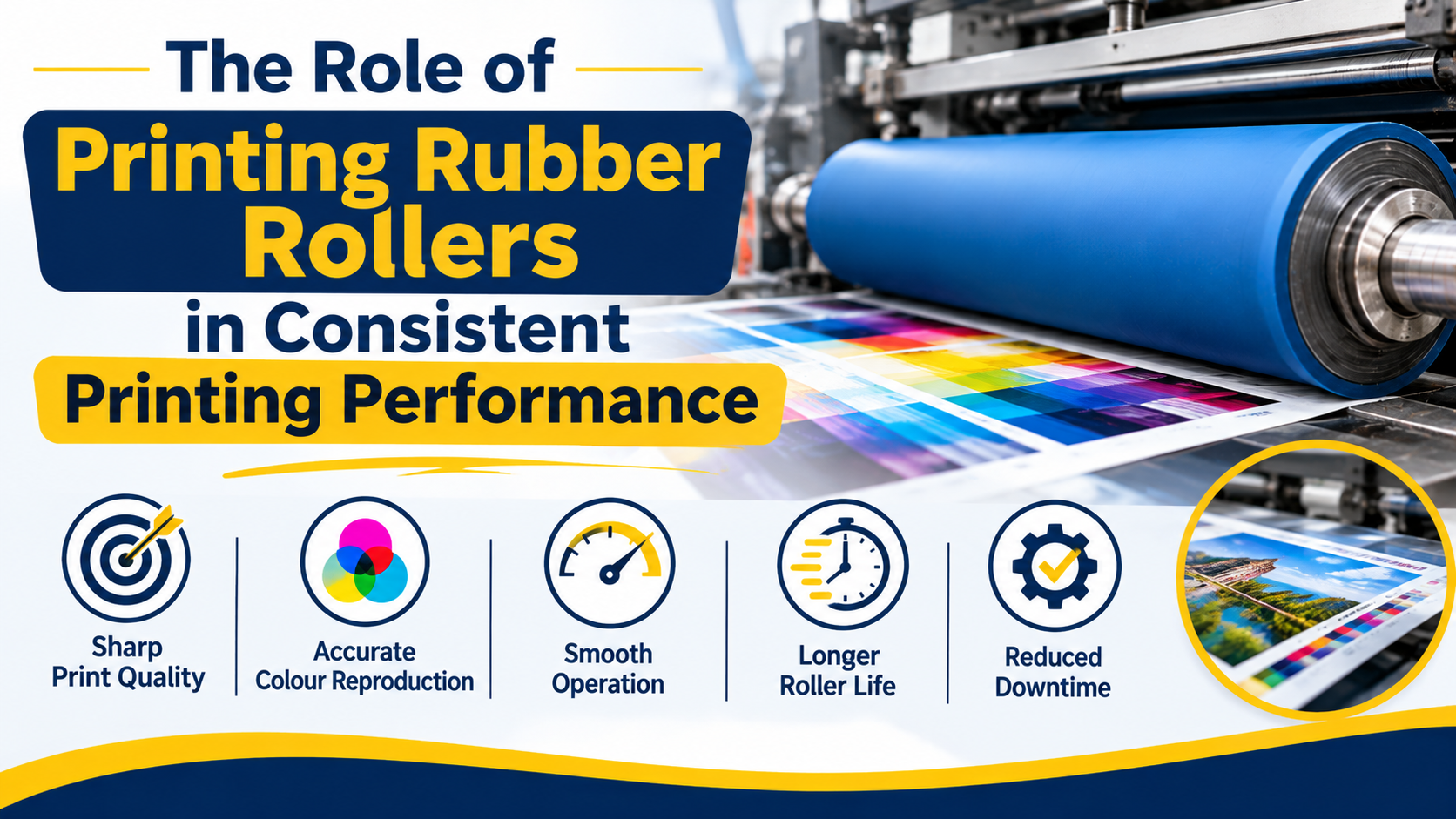
A printing rubber roller may look like a simple cylindrical component, but manufacturing a good roller involves several controlled stages.
The rubber compound must be suitable for the application. The roller must be prepared correctly. Vulcanization, grinding, surface finishing and quality checks all affect the final product.
For this reason, when a printer is looking for a rubber roller manufacturer in India, it is useful to understand what happens inside the manufacturing process.
A manufacturer should not only be able to supply a rubber covered roller. It should have control over the important stages that affect the roller’s final performance.
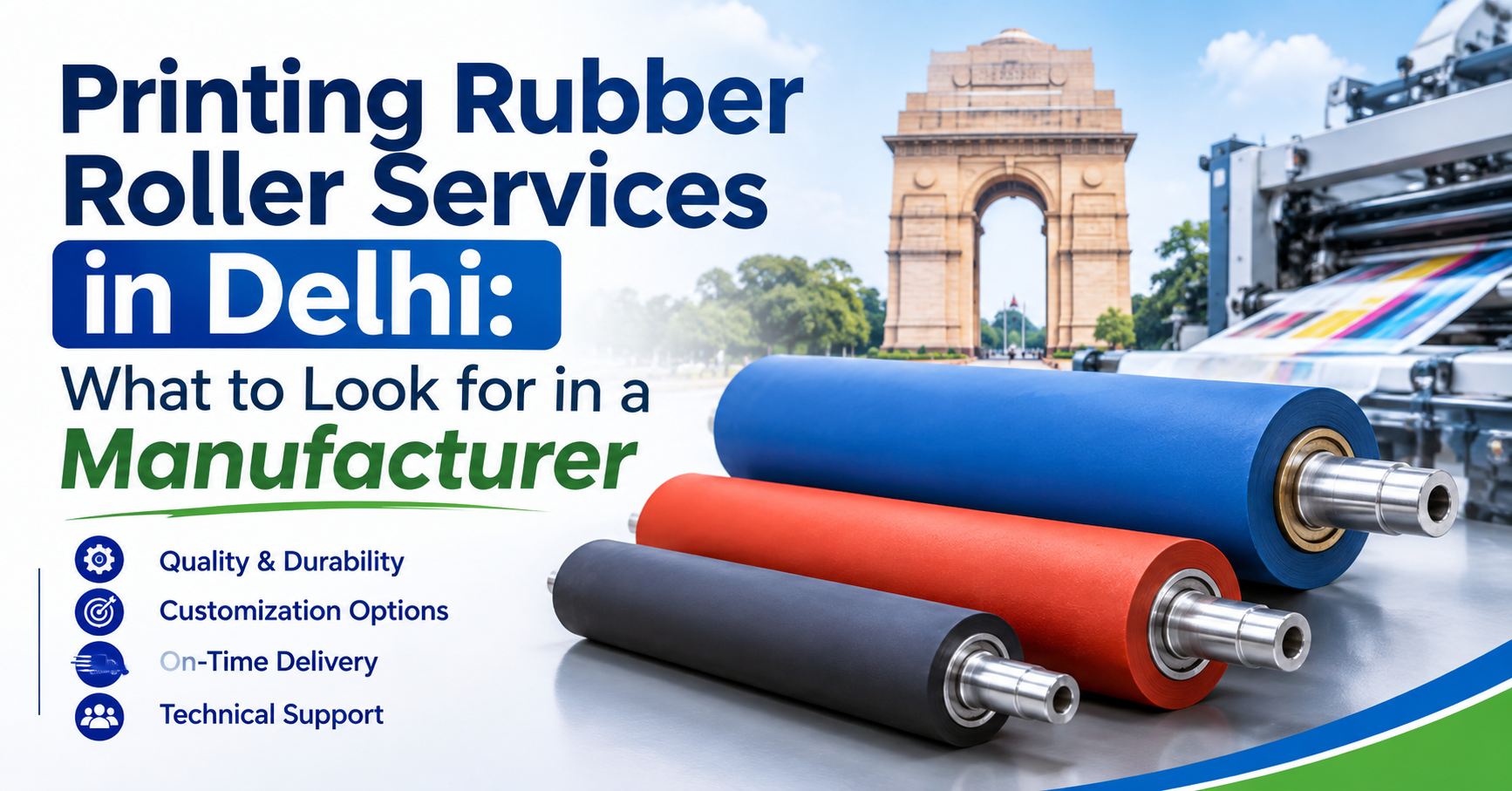
Max Rollers manufacturing printing and industrial rubber rollers from its facilities in Rai, Sonipat, Haryana, in the Delhi-NCR region follows a simple objective – manufacture a roller that performs consistently in the customer’s actual application.
Why the Manufacturing Process Matters
A printing roller works as part of a machine. Small variations in the roller can affect how it performs during production.
Important factors include:
- Rubber compound
- Hardness
- Roller dimensions
- Surface finish
- Ink compatibility
- Chemical resistance
- Machine configuration
- Printing application
A controlled manufacturing process helps keep these factors within the required specification.
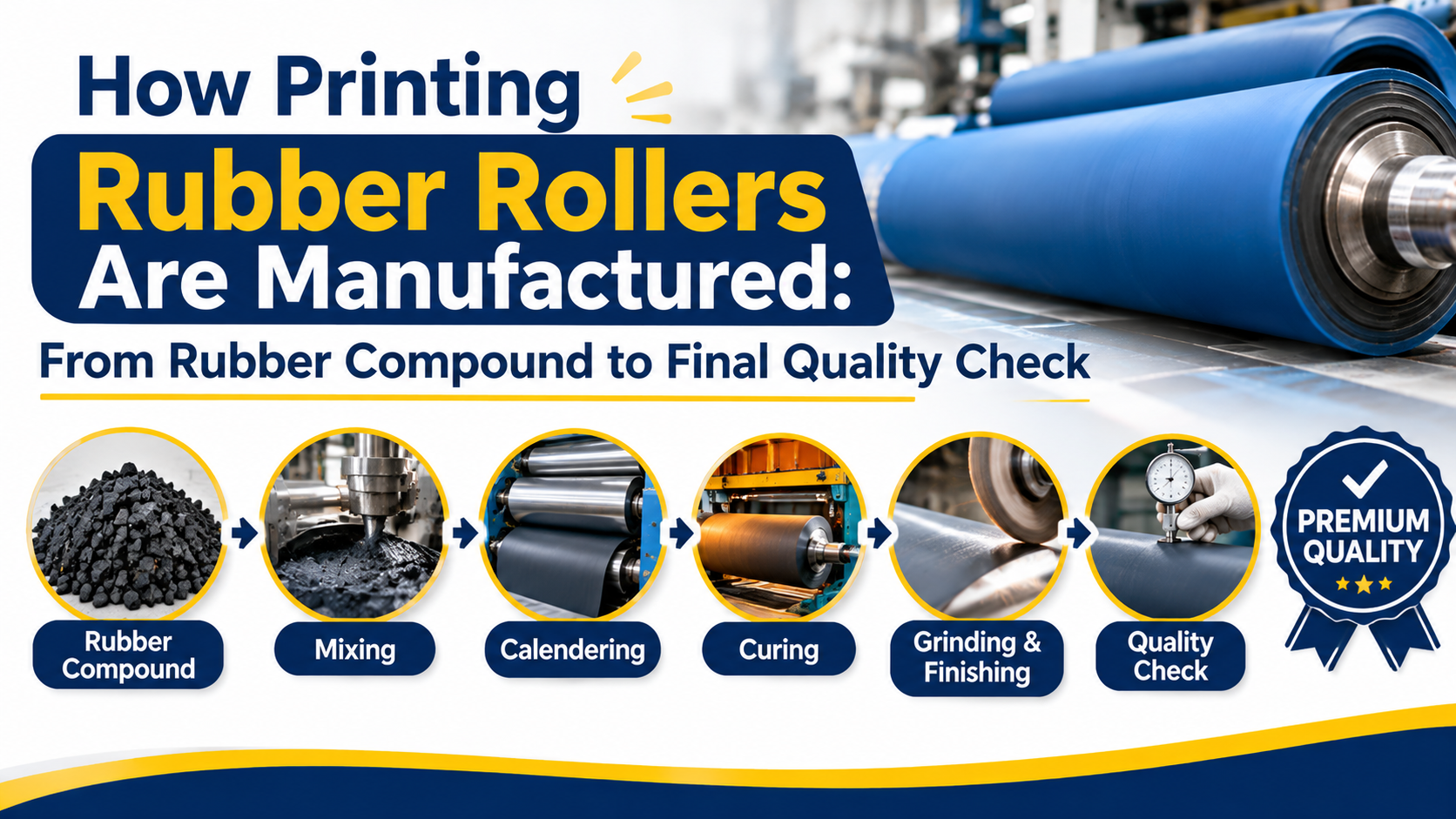
The main stages at Max Rollers include material selection, compounding, roller preparation, vulcanization, rough grinding, precision grinding, polishing or surface finishing, hardness testing, final inspection and dispatch.
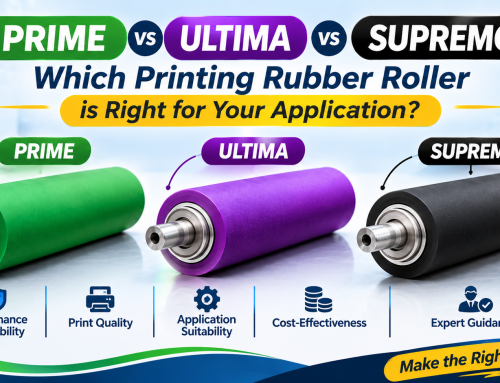
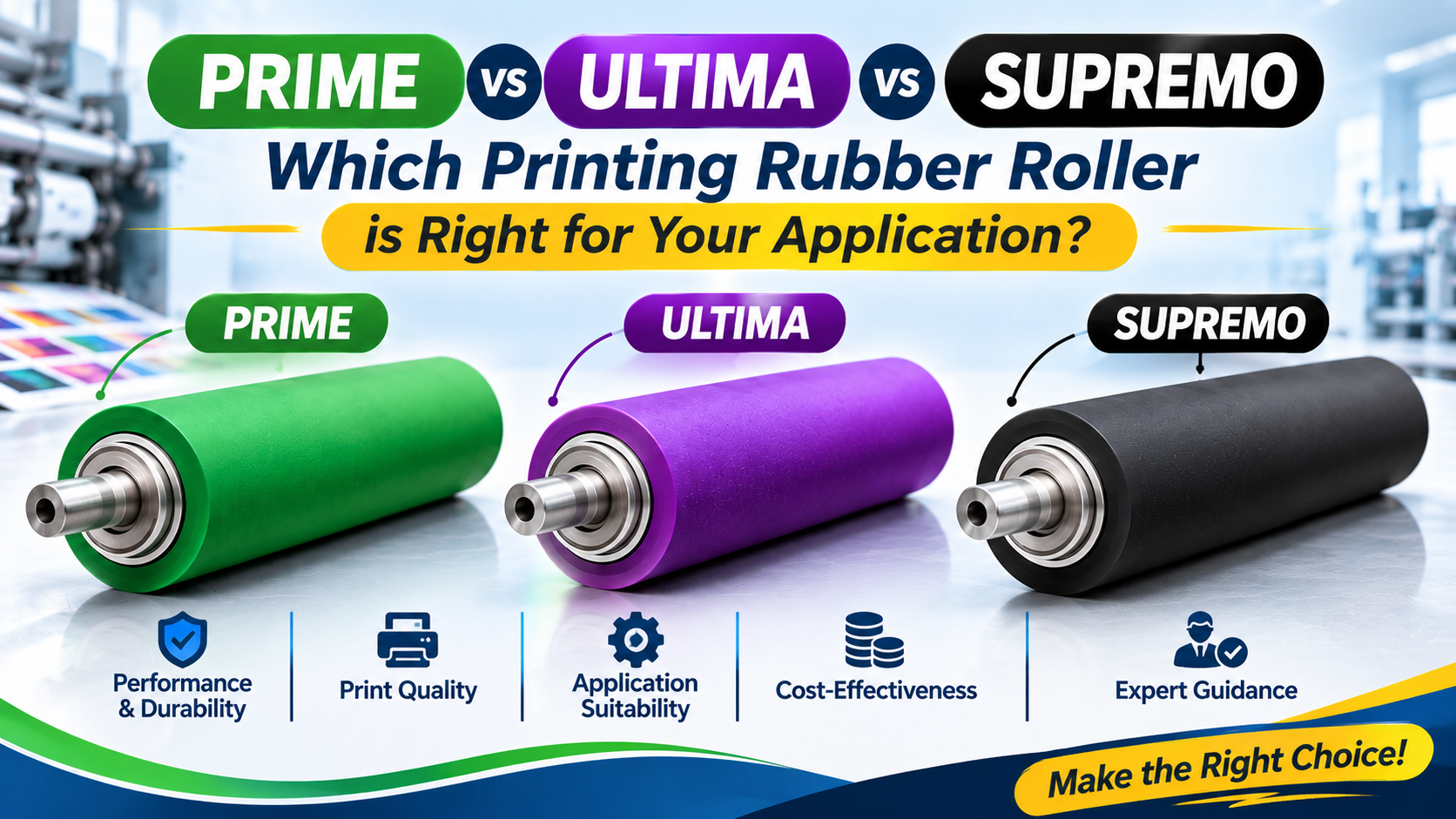
Know more about our Prime vs Ultima vs Supremo Offset Printing rubber rollers
Stage 1: Material Selection
The first step is selecting the appropriate rubber or polymer material.
The choice depends on the application.
Max Rollers’ information includes materials such as NBR, EPDM, PVC, polyurethane, synthetic rubber and other application-specific materials.
The exact formulation varies according to the roller grade and application.
This is important because different printing environments can place different demands on the rubber.
A material suitable for one application may not be suitable for another.
Stage 2: Rubber Compounding
The selected materials are combined according to the required formulation.
Compounding is important because the final rubber needs to have the required balance of properties.
These can include:
- Hardness
- Elasticity
- Ink compatibility
- Chemical resistance
- Surface characteristics
- Durability
- Stability during printing
The compound therefore has a direct role in how the final roller is expected to perform.
Stage 3: Roller Preparation
The prepared compound is processed with the roller core according to the required specification.
The roller core provides the mechanical structure, while the rubber covering provides the working surface.
The dimensions and construction need to match the customer’s requirement.
Stage 4: Vulcanisation
Vulcanisation is a controlled process used to develop the required physical properties of the rubber.
The process needs to be controlled because the final rubber performance depends on the properties developed during this stage.
The objective is to produce a stable rubber covering suitable for the application.
Stage 5: Rough Grinding
After the rubber is processed and vulcanised, the roller is brought closer to its required dimensions through rough grinding.
This stage prepares the roller for more accurate finishing.
Stage 6: Precision Grinding
Precision grinding is used to accurately achieve the required size and geometry.
This is an important stage because a roller needs to meet the required dimensions before it can be used in a machine.
The final dimensions depend on the customer’s machine and application requirements.
Stage 7: Polishing and Surface Finishing
After precision grinding, the roller surface is finished according to the application.
Surface condition is important in printing because the roller surface interacts with the printing system.
The required finish can vary depending on the application.
A controlled surface finish helps the manufacturer deliver a roller made for the intended use rather than a one-size-fits-all product.
Stage 8: Hardness Testing
The roller hardness is checked against the required specification.
Shore A hardness is an important parameter for rubber rollers.
The required hardness depends on the application.
For example, Max Rollers‘ alcohol roller information gives an approximate 22–24 Shore A range for relevant alcohol applications.
This is why hardness should be specified according to the application rather than assumed to be the same for every roller.
Stage 9: Final Inspection
The roller is checked before dispatch.
Quality checks can include:
- Rubber compound consistency
- Roller dimensions
- Shore A hardness
- Surface finish
- Grinding accuracy
- Visual inspection
- Bearing or shaft-related finishing
- Final roller condition
The purpose of these checks is to make sure that the finished roller meets the required specification.
Traceability and Roller Records
Max Rollers also uses a roller identification and registration system.
Each finished roller can be identified through a number-punch or identification system. The company maintains roller records for long-term reference and customer support.
This is useful when a customer needs to refer to a previous roller requirement or repeat an order.
How Manufacturing Control Supports Consistency
Consistency is built across the manufacturing process, not checked only at the end.
The compound must follow the required formulation. Vulcanisation must develop the required physical properties. Grinding must achieve the specified dimensions. Surface finishing must meet the required condition. Final hardness and dimensions must then be checked.
Controlling these stages gives the manufacturer a stronger basis for producing rollers to a repeatable specification.
Printing Applications
The manufacturing process supports different printing requirements, including conventional offset, UV, alcohol-based, commercial, packaging-related and specialised printing applications.
Because each application can place different demands on the roller, manufacturing parameters such as compound, hardness and surface finish are controlled according to the required specification.
Conclusion
The quality of a printing rubber roller begins long before the roller reaches the printing machine.
Material selection, rubber compounding, vulcanization, grinding, surface finishing and quality testing all play a role in the final product.
For printers evaluating a printing rubber roller manufacturer in India, understanding the manufacturing process provides a clearer view of how the finished roller is produced and controlled.
At Max Rollers, the manufacturing process is built around controlled production, application understanding and quality checking.
The goal is simple:
A roller made for the application.
A roller made to the required specification.
A roller built for consistent performance.
Looking for the Right Rubber Roller Solution?
Choosing the right offset printing rubber roller is essential for achieving consistent print quality, smooth operations, and long-lasting performance. Whether you need expert guidance, customized rubber rollers, or reliable manufacturing solutions, our team is here to help.
Get in touch with us today! Let our experts understand your requirements and help you find the right solution for your application.
Contact Us Today to discuss your requirements and get expert assistance.