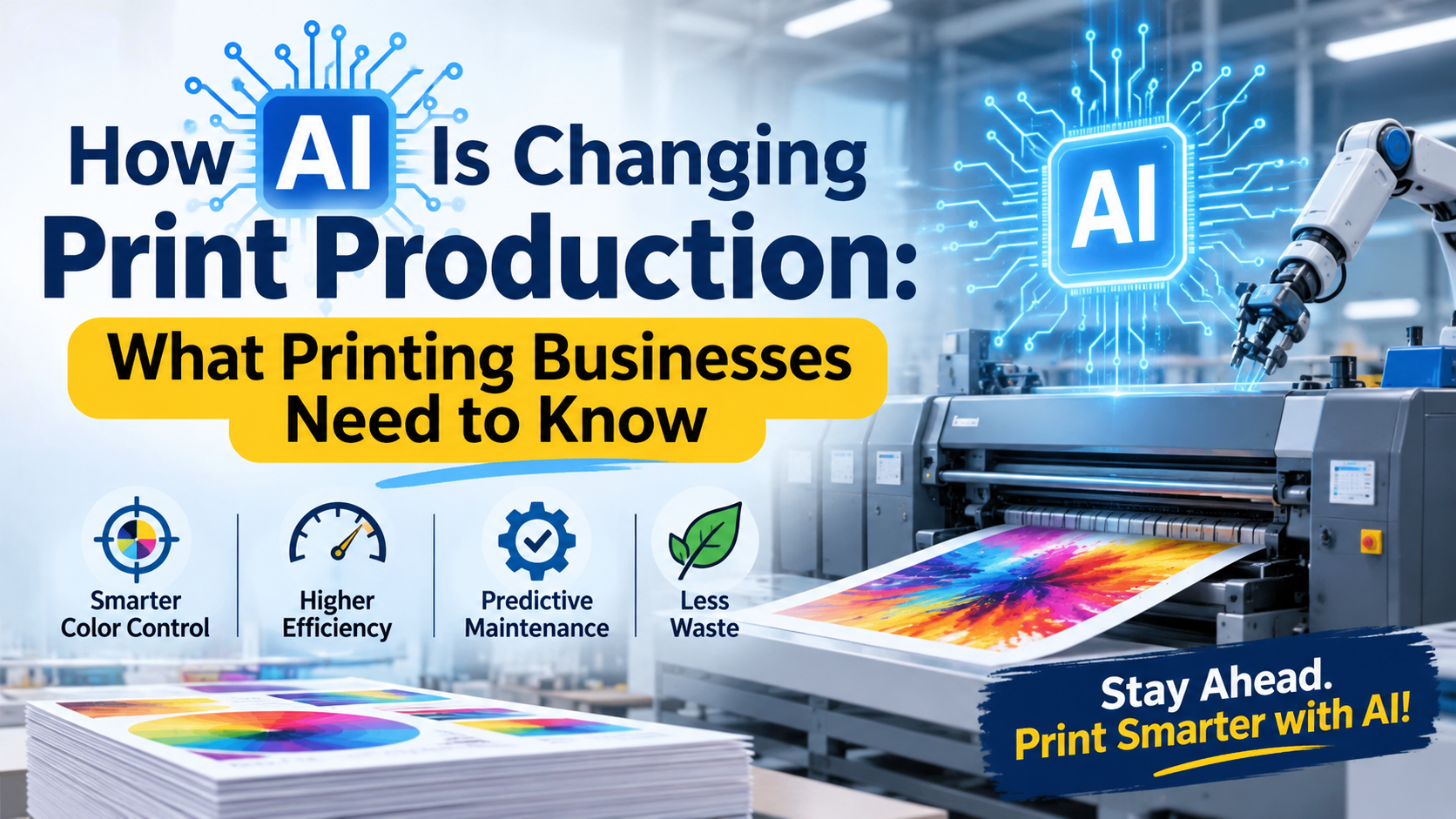
How AI Is Changing Print Production?
Artificial intelligence (AI) is moving from being a largely experimental technology to becoming a practical tool across industries. Printing is no exception.
Modern printing businesses already work with increasingly automated machines, digital workflows and large amounts of production data. AI can build on these systems by helping businesses analyse information, identify patterns and support decisions that were previously dependent largely on manual observation and experience.
For printing press owners, the question is not simply whether AI is relevant to the industry, but where it can add value to print production. As printing businesses invest in automation and better production control, choosing reliable printing equipment and working with an experienced printing rubber roller manufacturer remain important considerations alongside technological advancement.
From quality inspection and predictive maintenance to workflow optimisation and production monitoring, AI has the potential to influence several parts of the printing process. At the same time, it does not replace the importance of experienced operators, well-maintained equipment or correctly specified printing components.
Understanding where AI fits can help printing businesses make more informed decisions about their next stage of automation.
What Does AI Mean for the Printing Industry?
AI in printing refers to the use of artificial intelligence and data-driven systems to analyse production information, recognise patterns, automate certain decisions and improve operational efficiency.
The technology can be applied across different stages of print production.
Depending on the printing setup, AI-powered systems can potentially assist with:
- Quality inspection
- Defect detection
- Predictive maintenance
- Production monitoring
- Workflow management
- Scheduling
- Waste reduction
- Data analysis
- Process optimisation
The important point is that AI does not necessarily mean replacing an existing printing system with an entirely new one.
In many cases, it can work alongside existing printing equipment, production software and automated workflows to make better use of the data already being generated.
AI-Powered Quality Inspection
Maintaining consistent print quality is one of the most important requirements for any printing business.
Traditionally, quality inspection can involve operators visually checking printed output and identifying issues during production. AI and machine vision systems can support this process by analysing images and identifying variations or defects at production speed.
Depending on the system, automated inspection can help identify issues such as:
- Print defects
- Registration variations
- Colour inconsistencies
- Missing or incorrect elements
- Surface defects
- Repeated production errors
The advantage is not simply automation. The larger opportunity is the ability to analyse a high volume of production information consistently.
For a printing press handling large production runs, this can help operators identify problems earlier and respond before a larger quantity of material is affected.
Predictive Maintenance and Printing Equipment
Maintenance is another area where AI could have a practical role.
Traditional maintenance is often based on fixed schedules or responding when a machine component shows a noticeable problem. Predictive maintenance takes a different approach by using equipment data to identify patterns that may indicate a developing issue.
AI systems can analyse information such as operating conditions, machine behaviour and historical maintenance data to identify unusual patterns.
For printing businesses, this could eventually help with:
- Identifying potential equipment issues earlier
- Planning maintenance activities
- Reducing unexpected downtime
- Understanding component performance
- Improving maintenance scheduling
This approach is particularly relevant as printing presses become increasingly connected and automated. For businesses operating industrial printing equipment, predictive maintenance can help make equipment-performance data more useful when planning inspections and maintenance.
However, AI does not eliminate the need for physical inspection and technical expertise. Data can indicate that something has changed, but understanding the cause still requires knowledge of the machine and its components, including the printing rollers used in the system.
Where Do Printing Rollers Fit Into This?
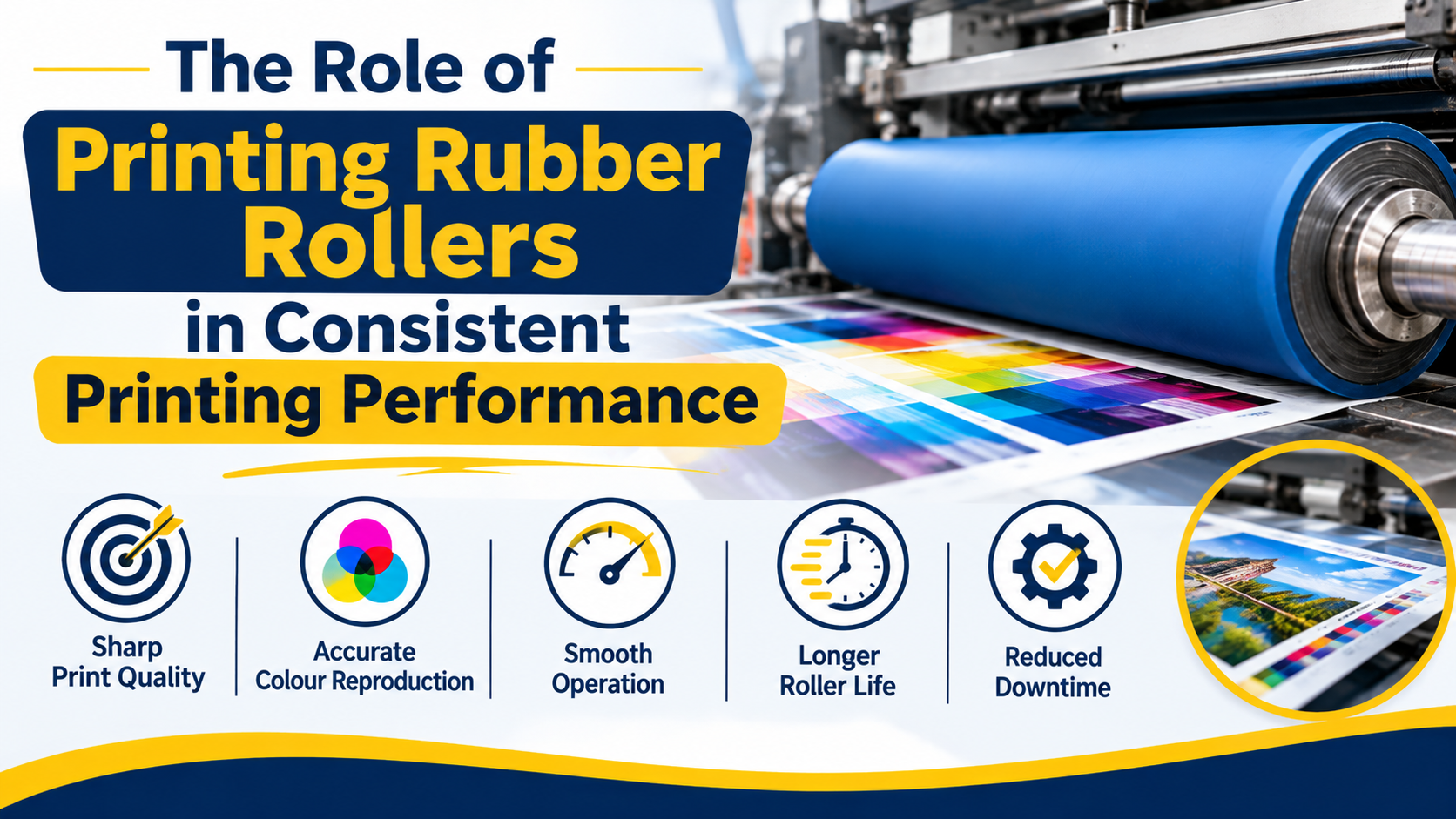
Printing rubber rollers are one of the many components that contribute to the overall performance of a printing system.
Their compound, hardness, dimensions and surface finish are selected according to the machine, ink system, printing process and operating conditions.
As printing businesses adopt more data-driven production systems, information about individual components could potentially become part of a broader equipment-performance picture.
For example, production records can help businesses understand replacement patterns, operating conditions and recurring performance changes.
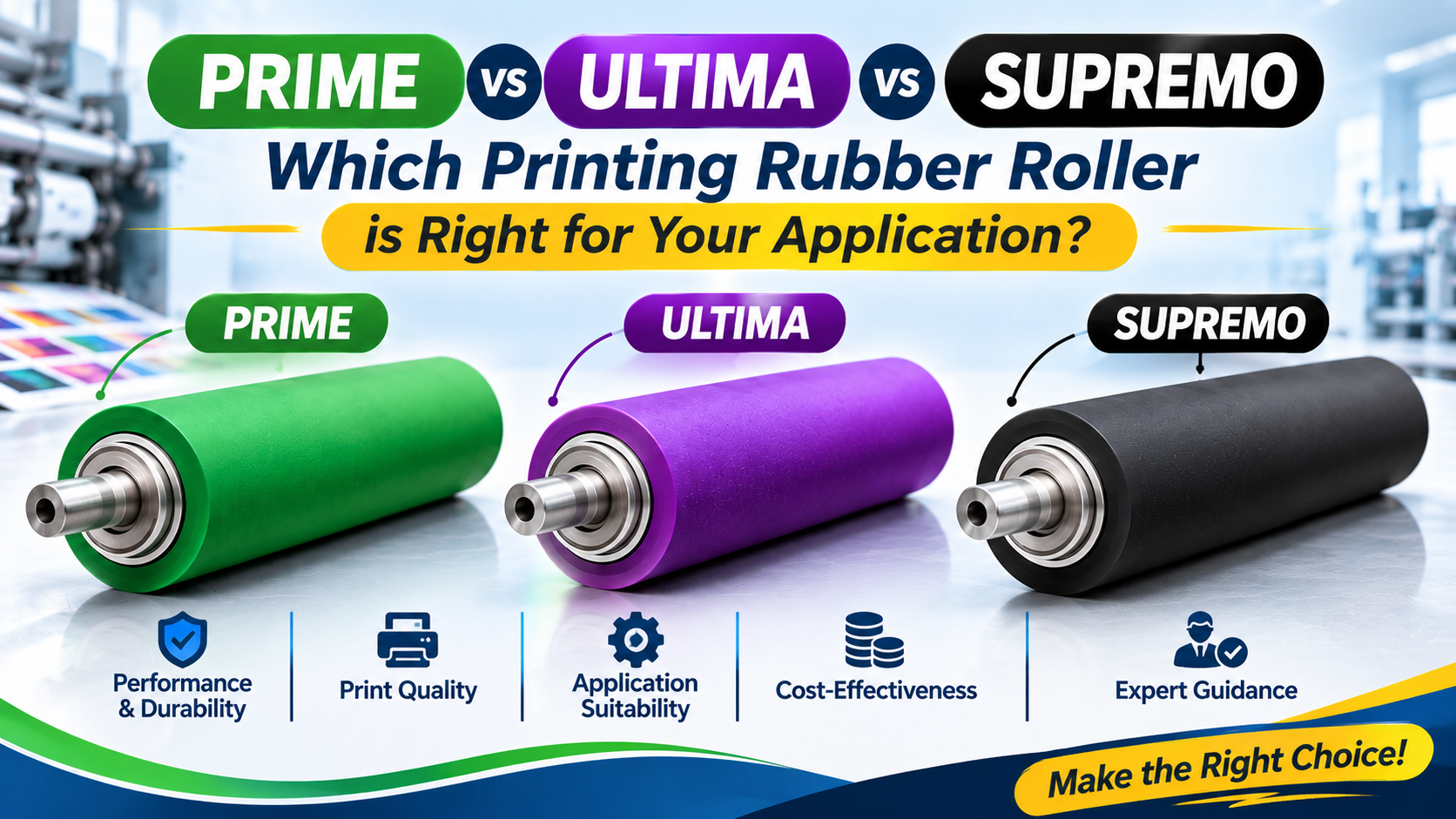
This does not mean that AI can independently determine the correct printing rubber roller for every application. Roller selection still requires an understanding of the actual machine configuration, printing process, ink system and application requirements.
For businesses sourcing rubber rollers for printing, the manufacturer’s understanding of these requirements remains important. An experienced rubber roller manufacturer in India should be able to consider the intended application when manufacturing rollers to the required specifications.
The opportunity lies in using technology to complement technical knowledge, rather than replacing it. AI may support better production monitoring, but selecting the right printing rubber rollers still depends on matching the product to the actual printing conditions.
AI and Workflow Optimisation
AI can also influence what happens around the printing press.
A modern print business has to manage more than the physical printing process. It also has to coordinate orders, production schedules, artwork, substrates, machine availability and delivery timelines.
AI-based systems can analyse production information and help identify more efficient ways of organising workflows.
Potential applications include:
- Production scheduling
- Job prioritisation
- Machine utilisation
- Workflow planning
- Estimating production requirements
- Analysing historical production data
For businesses handling multiple jobs and machines, better use of production data can become an important part of improving operational efficiency.
Can AI Help Reduce Printing Waste?
Waste is a significant consideration in print production.
Material can be lost because of setup, incorrect settings, quality issues, machine downtime or production errors. While AI cannot eliminate all sources of waste, data-driven systems can help identify patterns behind recurring losses.
For example, historical production data could be analysed to understand:
- Which jobs generate higher levels of waste
- Where production delays occur
- Which processes require repeated adjustments
- When quality issues tend to appear
- Which machines or workflows require closer monitoring
This creates an opportunity to move from simply recording production losses to understanding why they happen.
For a printing business, that distinction can be valuable.
AI Will Not Replace Printing Expertise
The growing use of AI does not mean that technical knowledge will become less important.
In fact, the opposite may be true.
AI can analyse data quickly, but experienced printing professionals understand the physical relationships between machines, inks, substrates, rollers, settings and operating conditions.
A system may identify that a production parameter has changed. An experienced operator or technical specialist is still needed to understand whether the change is significant and what action should be taken.
The most useful approach is therefore likely to be people + data + technology, rather than technology replacing people.
What Should Printing Businesses Consider Before Adopting AI?
AI adoption should begin with a clear production requirement rather than simply adopting technology because it is available.
A printing business should first identify where it is facing challenges.
Is the priority:
- Reducing production waste?
- Improving quality inspection?
- Reducing machine downtime?
- Improving production scheduling?
- Understanding equipment performance?
- Making better use of historical production data?
The answer can help determine where AI may actually provide value.
It is also important to consider the quality and availability of production data. AI systems depend on data, and useful insights require relevant and reliable information.
For businesses already using automated printing equipment and digital production systems, this can provide a useful starting point.
The Future of AI in Print Production
AI in printing is still developing, and its applications will continue to evolve as printing equipment becomes more connected and businesses collect more production data.
The future may see greater integration between printing machines, quality-control systems, maintenance data and production-management software.
This could allow printing businesses to move towards more predictive and data-driven operations rather than relying entirely on manual monitoring and reactive decision-making.
But the fundamentals of printing will remain important.
A sophisticated digital system cannot compensate for incorrectly specified equipment, unsuitable materials or poor process control.
Whether a printing press uses conventional, UV or other printing processes, the physical components still need to perform according to the requirements of the application.
Conclusion
AI is creating new possibilities for the printing industry, particularly in areas such as quality inspection, predictive maintenance, production monitoring, workflow optimisation and waste reduction.
For printing businesses, the real opportunity is not simply to add AI to existing operations. It is to use data and technology to understand production better and make more informed decisions.
As printing presses become increasingly automated, the combination of technology, machine data and human expertise is likely to become increasingly important.
And while AI may change how printing businesses monitor and manage production, the fundamentals of good printing remain the same: the right equipment, the right process and the right components working together consistently.
Looking for the Right Rubber Roller Solution?
Choosing the right offset printing rubber roller is essential for achieving consistent print quality, smooth operations, and long-lasting performance. Whether you need expert guidance, customized rubber rollers, or reliable manufacturing solutions, our team is here to help.
Get in touch with us today! Let our experts understand your requirements and help you find the right solution for your application.
Contact Us Today to discuss your requirements and get expert assistance.